Virtual Airport
- Techniek
- Unity 2022.3 · C# · OpenXR
- Team
- Changefied-team
- Sinds
- Maart 2026
- Context
- Stage bij Changefied · in ontwikkeling
Aanleiding Virtual Airport is een VR-training waarmee neurodiverse mensen, bijvoorbeeld met autisme of ADHD, zich veilig en zo vaak als nodig kunnen voorbereiden op een vliegreis. Een luchthaven is druk en onvoorspelbaar, en voorbij de security kom je normaal alleen met een vlucht. In VR kun je het van tevoren oefenen, zonder echte gevolgen. Een trainer kiest het level op een tablet, kijkt mee en kan ingrijpen. Het bouwt voort op Virtual OV, de virtuele OV-training van Changefied, en draait op PICO, HTC Vive en Meta Quest. Omdat het een project van het bedrijf is, laat ik geen code zien, alleen wat ik heb gebouwd.
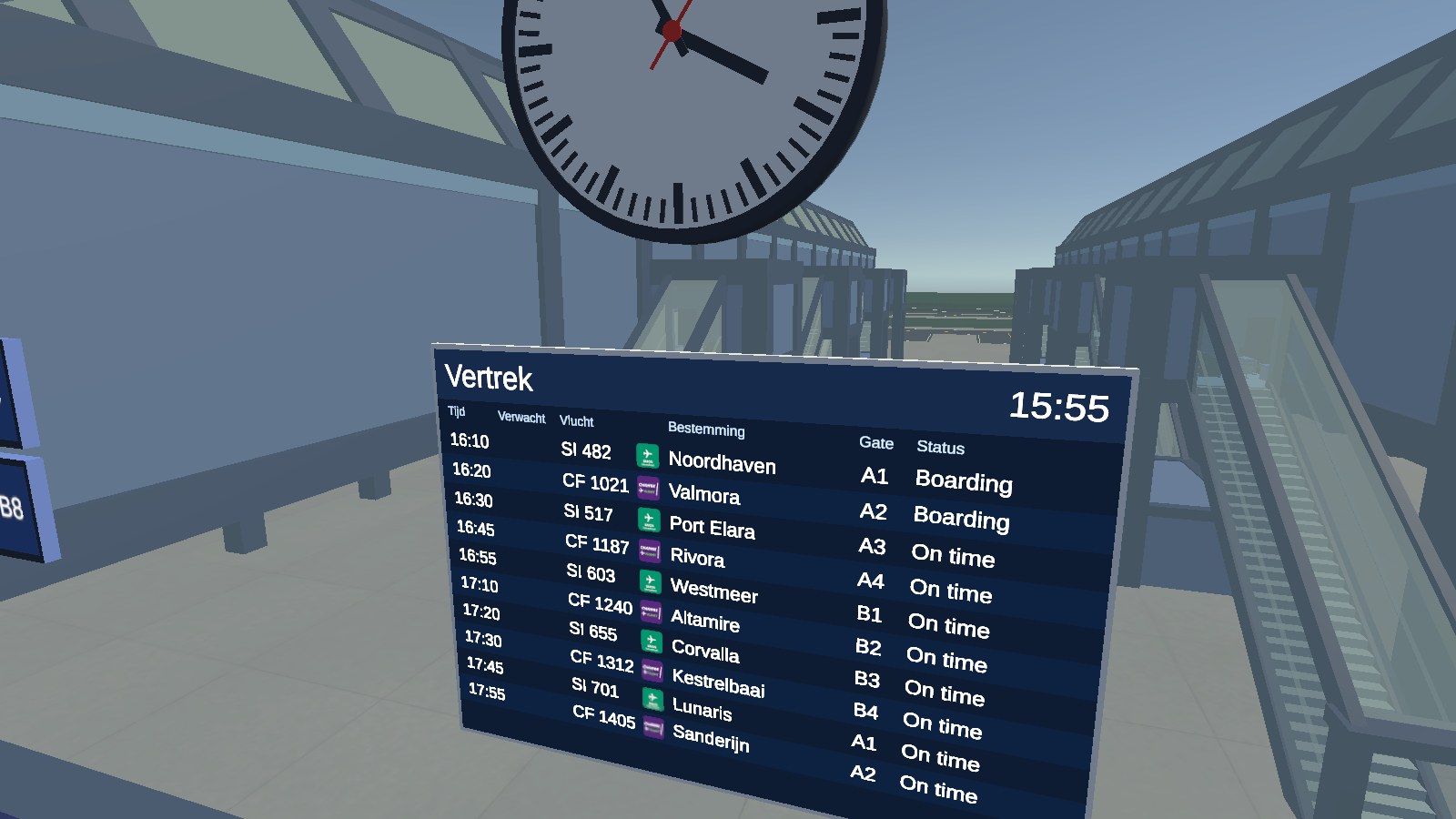
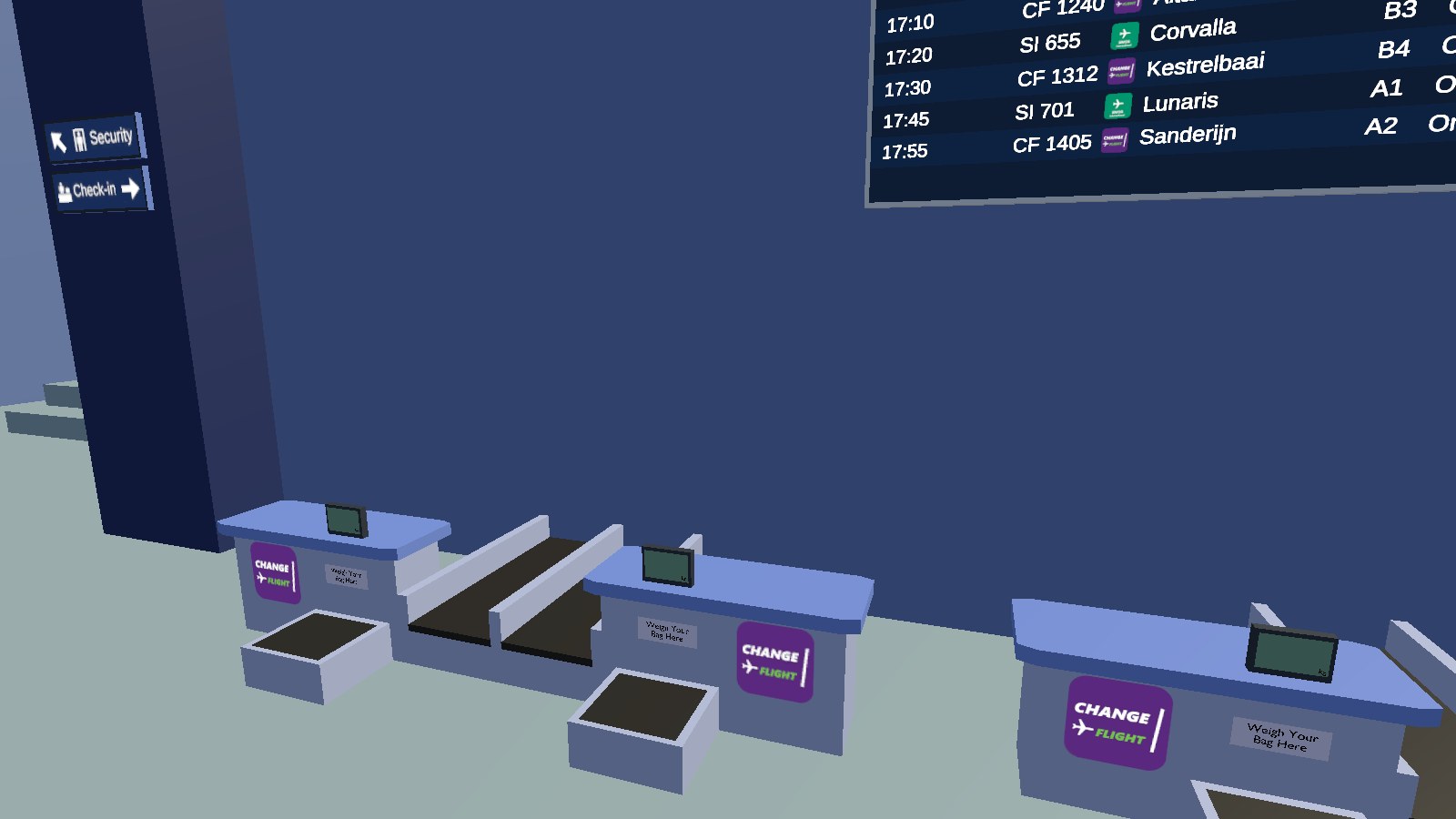
De game Je loopt door luchthaven Zuiderdam, met 32 gates, twee vliegmaatschappijen, winkels, medereizigers en een vertrekschema waarin vliegtuigen landen en vertrekken. Je krijgt elke ronde een willekeurige vlucht en stoel, dus de incheckbalie en de gate zijn steeds anders. Zo leer je je ticket, je boarding pass en de schermen te lezen in plaats van een route uit je hoofd te leren.
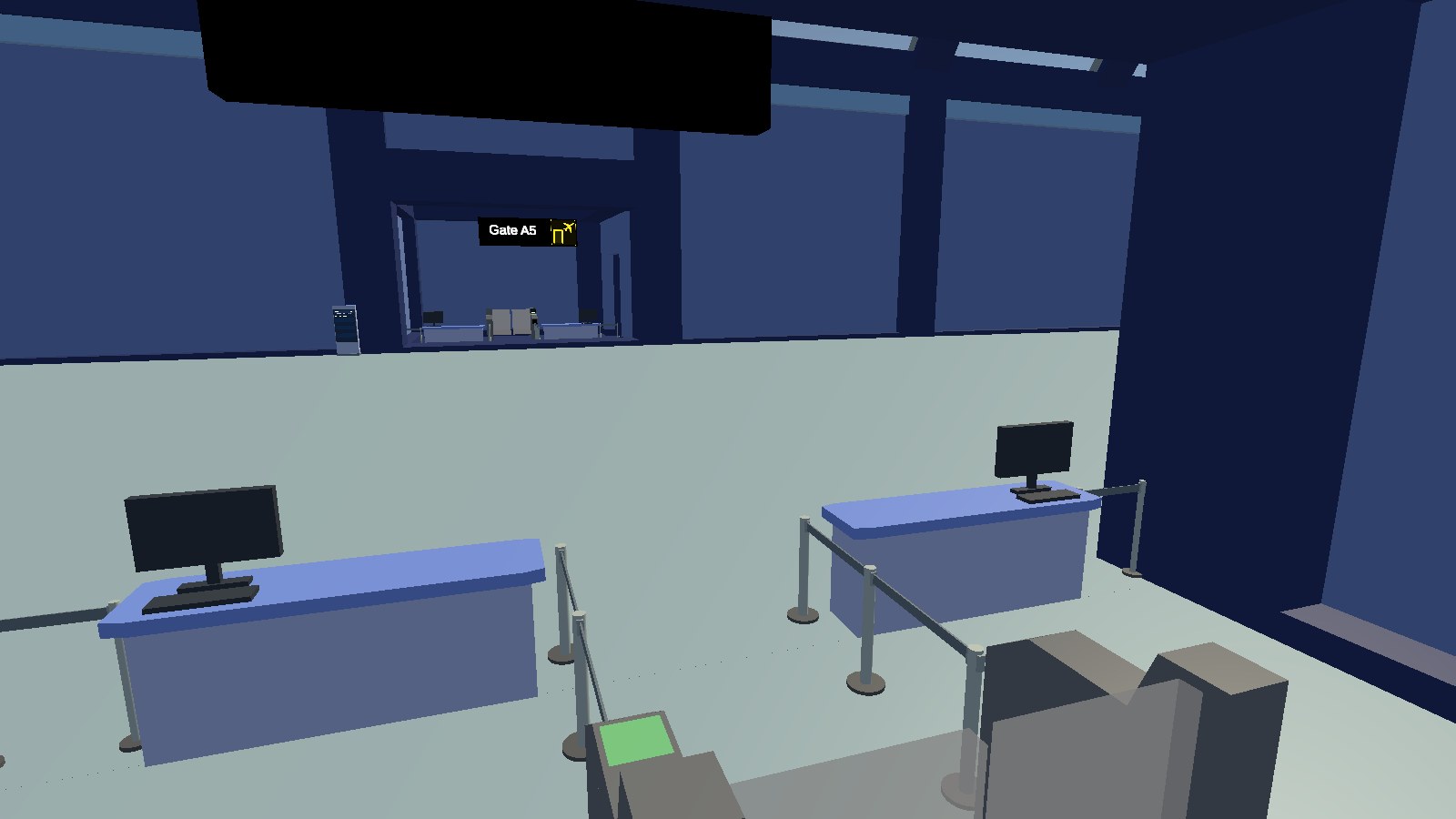
Mijn rol Ik heb de scène in maart 2026 opgezet en daarna level 1 gebouwd: de tutorial van binnenkomst tot boarden. Verder maakte ik het baliepersoneel, het vluchtsysteem, de poortjes en deuren, een groot deel van de bewegwijzering en de omgeving rond de terminal, en de reizigers die rondlopen. Naast het bouwen doe ik voor mijn stage onderzoek naar hoe je de begeleiding in VR stap voor stap afbouwt.
Een vliegveld dat ook zonder level werkt
De balies, controles, schermen en reizigers doen altijd hun werk, ook als er geen level geladen is. Een level voegt alleen begeleiding en gebeurtenissen toe, zoals een gesproken instructie, een wegwijzer op de grond of een vertraging. Dat maakt het afbouwen van begeleiding eenvoudig: in een later level laat je stappen weg, en de luchthaven zelf blijft hetzelfde. Een gatewijziging werkt op dezelfde manier: het level past alleen het vertrekschema aan, waarna alle schermen en de vlucht-app zichzelf bijwerken. Je ticket en boarding pass houden bewust de oude gate, zodat je leert dat de schermen leidend zijn.
- Tech
- Unity 2022.3 · C# · OpenXR
- Team
- Changefied team
- Since
- March 2026
- Context
- Internship at Changefied · in development
Background Virtual Airport is a VR training that lets neurodiverse people, for example with autism or ADHD, prepare for a flight safely and as often as they need. An airport is busy and unpredictable, and normally you can only get past security with a flight. In VR you can practise it beforehand, without real consequences. A trainer picks the level on a tablet, watches along and can step in. It builds on Virtual OV, Changefied's virtual public transport training, and runs on PICO, HTC Vive and Meta Quest. Because it's a company project, I don't show any code, only what I built.
The game You walk through Zuiderdam airport, with 32 gates, two airlines, shops, fellow travellers and a departure schedule in which planes land and take off. Every round you get a random flight and seat, so the check-in desk and gate are different each time. That way you learn to read your ticket, your boarding pass and the screens instead of memorising a route.
My role I set up the scene in March 2026 and then built level 1: the tutorial from arrival to boarding. I also made the desk staff, the flight system, the gates and doors, a large part of the signage and the surroundings of the terminal, and the travellers walking around. Next to building, my internship research is about how to reduce the guidance in VR step by step.
An airport that works without a level
The desks, checks, screens and travellers always do their job, even when no level is loaded. A level only adds guidance and events, such as a spoken instruction, a guide marker on the floor or a delay. That makes reducing the guidance simple: a later level leaves steps out, while the airport itself stays the same. A gate change works the same way: the level only changes the departure schedule, and every screen and the flight app update themselves. Your ticket and boarding pass deliberately keep the old gate, so you learn that the screens are what count.